
If you’ve been searching for a more youthful complexion, you’ve probably heard about peptides. These tiny but mighty molecules have been stirring the beauty industry for their anti-aging benefits.
But with so many options, how do you know which ones are the best?
Today, we’re going to break it down for you. In this blog post, we’ll explore the best anti-aging peptides worth considering for your skincare routine. No frills, no fluff – just straightforward information to help you make an informed decision. Let’s get started.
GHK-Cu
GHK-Cu is a copper complex of the peptide GHK (glycyl-L-histidyl-L-lysine) naturally occurring in the human body. It has a strong affinity for copper ions and can deliver them to the skin cells. Copper ions benefit the skin as they play a key role in various physiological processes important for maintaining skin health.
In terms of anti-aging, GHK-Cu offers several significant benefits:
- Stimulates Collagen and Elastin Production: GHK-Cu is known to stimulate the production of collagen and elastin, proteins that give skin elasticity and firmness. As we age, the production of these proteins decreases, leading to sagging skin and wrinkles. By boosting their production, GHK-Cu can help maintain the skin’s youthful firmness and reduce the appearance of fine lines and wrinkles.
- Promotes Glycosaminoglycans Production: GHK-Cu also stimulates the production of glycosaminoglycans, molecules that help the skin retain moisture. Hydrated skin appears plumper, smoother, and less lined, contributing to a youthful appearance.
- Antioxidant Properties: GHK-Cu has antioxidant properties, which can combat the damaging effects of free radicals in the skin. Free radicals can accelerate aging by breaking down collagen and causing skin damage.
- Skin Repair: By promoting the regeneration of skin cells and accelerating wound healing, GHK-Cu can repair damaged skin and prevent the formation of aging signs like wrinkles and fine lines.
Hexapeptide
Hexapeptide, often referred to as Argireline in skin care products, is a synthetic peptide made up of six amino acids. It’s particularly known for its anti-aging benefits:
- Expression Wrinkles Reduction: Hexapeptide works by mimicking the effects of Botox but in a non-invasive way. It inhibits the release of neurotransmitters that trigger muscle contractions that lead to the formation of expression lines. Relaxing facial muscles helps reduce the appearance of wrinkles and fine lines caused by repeated facial expressions.
- Collagen Production: Some research suggests that hexapeptides can also stimulate the production of collagen, a key protein that gives skin its firmness and elasticity. Our bodies produce less collagen as we age, leading to sagging skin and wrinkles. By boosting collagen production, hexapeptides can help maintain the skin’s youthful firmness.
- Skin Hydration: Hexapeptides can also improve skin hydration. Properly hydrated skin appears plumper, which can help to smooth out fine lines and give the skin a more youthful appearance.
Matrixyl
The most commonly used forms in skincare are Matrixyl, Matrixyl 3000, and Matrixyl Synthe’6. Each of these variants has unique properties, but all are known for their powerful anti-aging benefits:
- Stimulates Collagen Production: By boosting collagen production, Matrixyl can help maintain the skin’s youthful firmness and reduce the appearance of fine lines and wrinkles.
- Repairs Damaged Skin: Matrixyl also helps repair damaged skin by stimulating the skin cells (fibroblasts) to produce more proteins (collagen and elastin) that keep skin strong and flexible.
- Reduces Wrinkle Depth and Volume: Matrixyl 3000 has been shown in studies to significantly reduce the depth and volume of wrinkles. It achieves this by reorganizing the network of the skin structure, making it smoother and more even.
- Promotes Skin Smoothness: Matrixyl Synthe’6 stimulates six major components of the skin matrix (collagen I, III, IV, fibronectin, hyaluronic acid, and laminin 5) to smooth out wrinkles from within, particularly on the forehead and crow’s feet.
Tripeptide-29
Tripeptide-29, or Collagen Tripeptide, is a short-chain peptide consisting of three amino acids. It’s widely recognized for its potent anti-aging benefits:
- Mimics Natural Collagen: Tripeptide-29 is structurally similar to the collagen found in our bodies, so it effectively mimics natural collagen. This means it can integrate seamlessly into our skin, helping to replenish lost collagen and restore the skin’s natural structure.
- Improves Skin Texture: By increasing collagen levels, Tripeptide-29 reduces wrinkles and improves overall skin texture. Skin becomes smoother, more supple, and gains a more youthful appearance.
- Promotes Wound Healing: Although not directly an anti-aging benefit, Tripeptide-29’s ability to promote wound healing can benefit anti-aging skincare. Accelerating skin repair can help maintain healthy, youthful-looking skin.
Epithalon
Epithalon, also known as Epitalon or Epithalone, is another synthetic peptide known for its potential anti-aging benefits:
- Promotes Telomere Lengthening: Epithalon is best known for its ability to lengthen telomeres, the protective caps on the ends of our DNA strands. Shortening of telomeres is linked to aging and a higher risk of age-related diseases. By promoting telomere lengthening, Epithalon could potentially slow down the aging process.
- Stimulates Pineal Gland: Epithalon stimulates the pineal gland to produce melatonin, a hormone that regulates sleep. Proper sleep is essential for the body’s repair processes, which can help maintain a more youthful appearance.
- Antioxidant Properties: Epithalon has antioxidant properties, meaning it can neutralize harmful free radicals that accelerate aging by causing damage to cells in the body, including skin cells.
- Enhances Protein Production: Epithalon also enhances protein production, which can aid in repairing damaged tissues and delay aging.
- Boosts Immune System: A strong immune system helps keep the body healthy and youthful. Epithalon has been shown to boost the immune system, contributing to overall health and longevity.
How do Peptides for Anti-Aging Work?
Proteins such as collagen, elastin, and keratin are vital for maintaining the structure, texture, and resilience of our skin. As we age, their production decreases, leading to signs of aging like wrinkles, fine lines, and loss of elasticity.
Peptides play a crucial role in anti-aging skincare due to their ability to stimulate collagen synthesis.
Collagen Production: Collagen is a protein that gives our skin its structure and elasticity. As we age, collagen production decreases, leading to wrinkles and sagging skin. Certain peptides, known as collagen peptides, can stimulate the production of new collagen, helping to maintain the skin’s firmness and youthful appearance.
Cell Communication: Some peptides act as signaling molecules that “tell” other cells what to do. In terms of anti-aging, these peptides can signal skin cells to produce more collagen or other proteins lost with age or repair damage caused by environmental factors like sun exposure.
Antioxidant Properties: Some peptides also have antioxidant properties, which can neutralize harmful free radicals. Free radicals are unstable molecules that can damage cells and contribute to aging and diseases. By neutralizing these molecules, antioxidant peptides can help protect the skin and slow down the aging process.
Transdermal Delivery: Certain peptides, known as carrier peptides, can deliver active ingredients deep into the skin. This can enhance the effectiveness of anti-aging products by ensuring that their active ingredients reach the deeper layers of the skin where they can have the most impact.
Hormone Regulation: Peptides can stimulate the body’s production of human growth hormone (HGH), which plays a role in maintaining muscle mass, metabolism, and skin health. As HGH levels naturally decrease with age, these peptides may help to slow down some of the effects of aging.
Reducing Inflammation: Certain peptides have anti-inflammatory properties. Since chronic inflammation can accelerate aging and lead to various health problems, these peptides could slow the aging process by reducing inflammation.
How to Use Peptides?
Topical Peptides (Serums and Creams)
Begin by cleansing your skin to remove any dirt or makeup. Apply the peptide serum or cream directly onto your skin, focusing on areas of concern like wrinkles or fine lines. Following up with a moisturizer can help lock in the peptides and provide additional hydration. It’s generally recommended to use these products once or twice daily, but always follow the instructions on the product label.
Transdermal Patches
After cleaning and drying your skin, apply the patch to the area as the product packaging instructs. The peptides are absorbed through the skin over time. Once you’ve worn the patch for the recommended amount of time, remove it. These patches are usually used once a day.
Oral Peptides
Oral peptides come in pill or liquid form. Follow the dosage instructions provided by the manufacturer or your healthcare provider. They’re typically taken with a meal to enhance absorption.
Injectable Peptides
Injectable peptides should only be used under the guidance of a healthcare professional. They usually come as a powder that must be reconstituted with sterile water before being injected. The injection should be administered at the site directed by your healthcare provider.
Whether you’re using peptides for scientific research or personal use, you need to know it’s necessary to dilute them. But how? Should you use “regular” tap water, filtered, sterile or stick to bacteriostatic?
Of course, if you’re someone dealing with any type of injectables, you know that tap water is not the best thing to use here, as it contains impurities, is not suitable for injections and, in the most severe cases, it can lead to death.
So, the choice really comes down to sterile VS bacteriostatic water. And this is what we’re going to be talking about in the following chapter.
Sterile VS Bacteriostatic Water For Peptide Reconstitution
Sterile water is purified, distilled water that has been brought down to a pH of 4.5 – 7.0. As such, it’s commonly used for injectables – subcutaneous, intramuscular or intravenous. But the downside of sterile water is that it’s easy to contaminate once exposed to the surroundings, even to yourself.
Another critical thing to keep in mind when using sterile water is to check its formula and see if it’s for irrigation (washing rinsing) or the one for injections. This is not a mistake you’d want to make as it might lead to serious consequences.
Bacteriostatic water, on the other hand, is also a variation of sterile water brought down to the range of 4.5 to 7 pH, but with one major addition – a bacteriostat, which is a compound that stops bacterial growth. In most cases (ours included), this bacteriostat is 0.9% benzyl alcohol.
Benzyl alcohol is a chemical compound commonly used in antibiotics and anti-inflammatory medicine due to its powerful bacteriostatic properties.
So, bacteriostatic water is the preferred choice to be used for intramuscular, intravenous and subcutaneous injections with an added benefit that it does not get contaminated as easily as sterile water.
Now that we’ve covered these main differences and use cases, we can dig into the bacteriostatic water side of things and see what it’s made of and why it’s so suitable for the process of diluting peptides.
What Exactly Is Bacteriostatic Water?
Like we already said at the beginning of the article, bacteriostatic water is basically a type of steryl water but its unique composition grants it bacteriostatic properties. The main compound which allows it these properties is, in most cases, 0.9% benzyl alcohol.
This alcohol solution not only protects the water from contaminants, such as bacteria, but also halters their growth and allows the water to remain relatively stable – hence, this water is also sometimes referred to as “static”.
Not only that, bacteriostatic water is safe to be used for multiple injections and it also allows for a 28-day usage timeframe, as it is not easily contaminated by the environment.
Using Bacteriostatic Water For Peptide Reconstitution
All the bacteriostatic water attributes we’ve outlined so far, make it a perfect solution for peptides reconstitution.
Most peptides, when stored or transported to the desired location, come in a so-called lyophilized state (freeze-dried powder form). This powder form is suitable for transport as it ensures an added level of stability. But, when you get around to using it (in the laboratory environment or home setting to be injected), you need to transform the peptide to a liquid form. This is what’s called peptide reconstruction.
The point of peptide reconstitution is to allow a safe and straightforward subcutaneous injection process.
Preparing Peptides and Bacteriostatic Water for Injection
Though preparing peptides might seem like a daunting, dull and outright boring and unnecessary task, it should not be overlooked as it will ensure a safe application and protection of yourself and your body.
Here are the step-by-step instructions for preparing and reconstituting peptides the safe way:
- Make sure to wipe down the vials containing both peptides and bacteriostatic water with an alcohol wipe
- Carefully attach the needle tip to the syringe
- Insert the needle tip into the sealed bacteriostatic water container
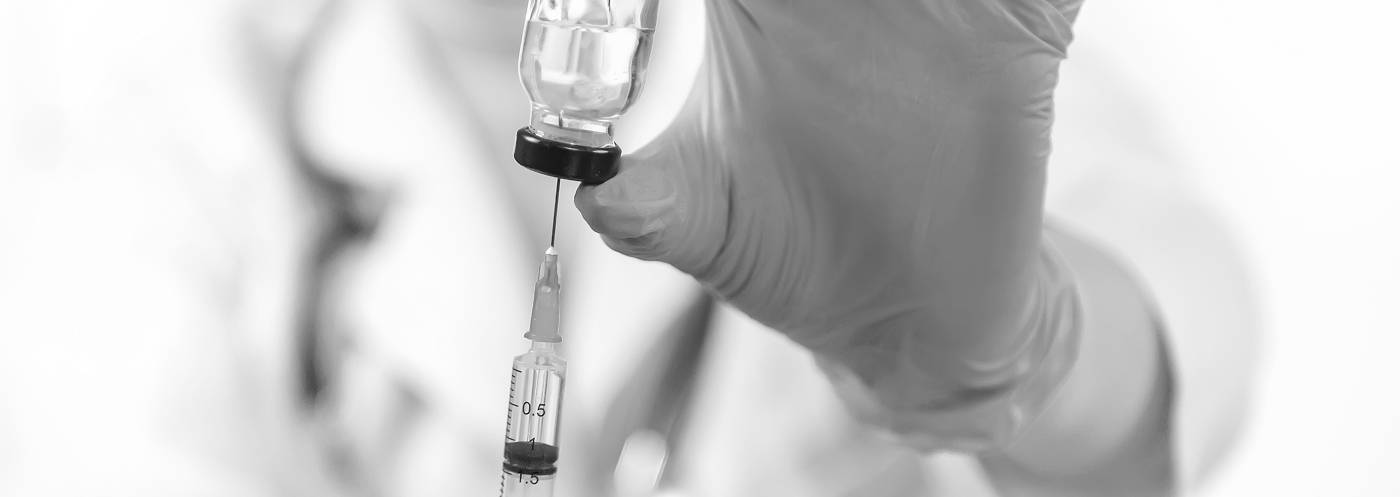
- Draw out the necessary water amount
- Once you remove the needle from the vial, insert it into the peptide vial
- While dispensing the bacteriostatic water into the peptide vial, make sure you do it slowly and so that the water trickles down the side of the vial. You should avoid spraying the water directly onto the peptide powder as it can compromise its integrityOnce you are done reconstituting the peptide, REMOVE the current needle tip and replace it with a new one
- Then, and only then, draw out the required peptide volume into the syringe and administer the injection
Administering Peptide Injections
Peptide injections are administered subcutaneously, meaning they are injected beneath the skin but without penetrating the muscle, much like intravenous injections (without penetrating the veins of course). Literature suggests two primary injection methods: at a 90 or a 45-degree angle.
Determining which one suits you the most is a bit tricky, but is done the following way:
- Pinch the skin of the potential administration site with two fingers. If you can grasp at least 2 inches of your skin, a 90-degree angle application is the way to go
- If you are able to pinch only 1 inch of skin between your fingers, you should opt for a 45-degree angle
- As we said, determining the correct application method can be a bit tricky for a layman, so feel free to consult a medical professional to guide you through the initial try. Or at least find a friend or a relative with a bit of medical knowledge and ask them to help you out.
Proper Storage of Bacteriostatic Water
If you are just an individual and you get just as much (little) bacteriostatic water you need for your next couple dosages, you might not even think about storage. But if you are a part of a peptide research lab, you must ensure a steady supply of bacteriostatic water and proper storage.
Whether you’ve opened the bottle, or the bottle remains unopened, you should store it in a dark, cool place with a relatively stable temperature. General recommendation for bacteriostatic water is to keep the room somewhere in the range of 60 to 80 degrees Fahrenheit.
These conditions will ensure long bacteriostatic shelf life and usage potential. But know that once you’ve opened it (draw from it with a syringe), it’s “only” good for around one month before the benzyl alcohol begins to lose its potency and the water itself becomes susceptible to bacterial contamination.