
Whether you’re using peptides for scientific research or personal use, you need to know it’s necessary to dilute them. But how? Should you use “regular” tap water, filtered, sterile or stick to bacteriostatic?
Of course, if you’re someone dealing with any type of injectables, you know that tap water is not the best thing to use here, as it contains impurities, is not suitable for injections and, in the most severe cases, it can lead to death.
So, the choice really comes down to sterile VS bacteriostatic water. And this is what we’re going to be talking about in the following chapter.
Sterile VS Bacteriostatic Water For Peptide Reconstitution
Sterile water is purified, distilled water that has been brought down to a pH of 4.5 – 7.0. As such, it’s commonly used for injectables – subcutaneous, intramuscular or intravenous. But the downside of sterile water is that it’s easy to contaminate once exposed to the surroundings, even to yourself.
Another critical thing to keep in mind when using sterile water is to check its formula and see if it’s for irrigation (washing rinsing) or the one for injections. This is not a mistake you’d want to make as it might lead to serious consequences.
Bacteriostatic water, on the other hand, is also a variation of sterile water brought down to the range of 4.5 to 7 pH, but with one major addition – a bacteriostat, which is a compound that stops bacterial growth. In most cases (ours included), this bacteriostat is 0.9% benzyl alcohol.
Bacteriostatic water, on the other hand, is also a variation of sterile water brought down to the range of 4.5 to 7 pH, but with one major addition – a bacteriostat, which is a compound that stops bacterial growth. In most cases (ours included), this bacteriostat is 0.9% benzyl alcohol.
Benzyl alcohol is a chemical compound commonly used in antibiotics and anti-inflammatory medicine due to its powerful bacteriostatic properties.
So, bacteriostatic water is the preferred choice to be used for intramuscular, intravenous and subcutaneous injections with an added benefit that it does not get contaminated as easily as sterile water.
Now that we’ve covered these main differences and use cases, we can dig into the bacteriostatic water side of things and see what it’s made of and why it’s so suitable for the process of diluting peptides.
What Exactly Is Bacteriostatic Water?
Like we already said at the beginning of the article, bacteriostatic water is basically a type of steryl water but its unique composition grants it bacteriostatic properties. The main compound which allows it these properties is, in most cases, 0.9% benzyl alcohol.
This alcohol solution not only protects the water from contaminants, such as bacteria, but also halters their growth and allows the water to remain relatively stable – hence, this water is also sometimes referred to as “static”.
Not only that, bacteriostatic water is safe to be used for multiple injections and it also allows for a 28-day usage timeframe, as it is not easily contaminated by the environment.
Using Bacteriostatic Water For Peptide Reconstitution
All the bacteriostatic water attributes we’ve outlined so far, make it a perfect solution for peptides reconstitution.
Most peptides, when stored or transported to the desired location, come in a so-called lyophilized state (freeze-dried powder form). This powder form is suitable for transport as it ensures an added level of stability. But, when you get around to using it (in the laboratory environment or home setting to be injected), you need to transform the peptide to a liquid form. This is what’s called peptide reconstruction.
The point of peptide reconstitution is to allow a safe and straightforward subcutaneous injection process.
Preparing Peptides and Bacteriostatic Water for Injection
Though preparing peptides might seem like a daunting, dull and outright boring and unnecessary task, it should not be overlooked as it will ensure a safe application and protection of yourself and your body.
Here are the step-by-step instructions for preparing and reconstituting peptides the safe way:
- The point of peptide reconstitution is to allow a safe and straightforward subcutaneous injection process.
- Make sure to wipe down the vials containing both peptides and bacteriostatic water with an alcohol wipe
- Carefully attach the needle tip to the syringe
- Insert the needle tip into the sealed bacteriostatic water container
- Draw out the necessary water amount
- Once you remove the needle from the vial, insert it into the peptide vial
- While dispensing the bacteriostatic water into the peptide vial, make sure you do it slowly and so that the water trickles down the side of the vial. You should avoid spraying the water directly onto the peptide powder as it can compromise its integrity
- Once you are done reconstituting the peptide, REMOVE the current needle tip and replace it with a new one
- Then, and only then, draw out the required peptide volume into the syringe and administer the injection
Administering Peptide Injections
Peptide injections are administered subcutaneously, meaning they are injected beneath the skin but without penetrating the muscle, much like intravenous injections (without penetrating the veins of course). Literature suggests two primary injection methods: at a 90 or a 45-degree angle.
Determining which one suits you the most is a bit tricky, but is done the following way:
- Pinch the skin of the potential administration site with two fingers. If you can grasp at least 2 inches of your skin, a 90-degree angle application is the way to go
- If you are able to pinch only 1 inch of skin between your fingers, you should opt for a 45-degree angle
As we said, determining the correct application method can be a bit tricky for a layman, so feel free to consult a medical professional to guide you through the initial try. Or at least find a friend or a relative with a bit of medical knowledge and ask them to help you out.
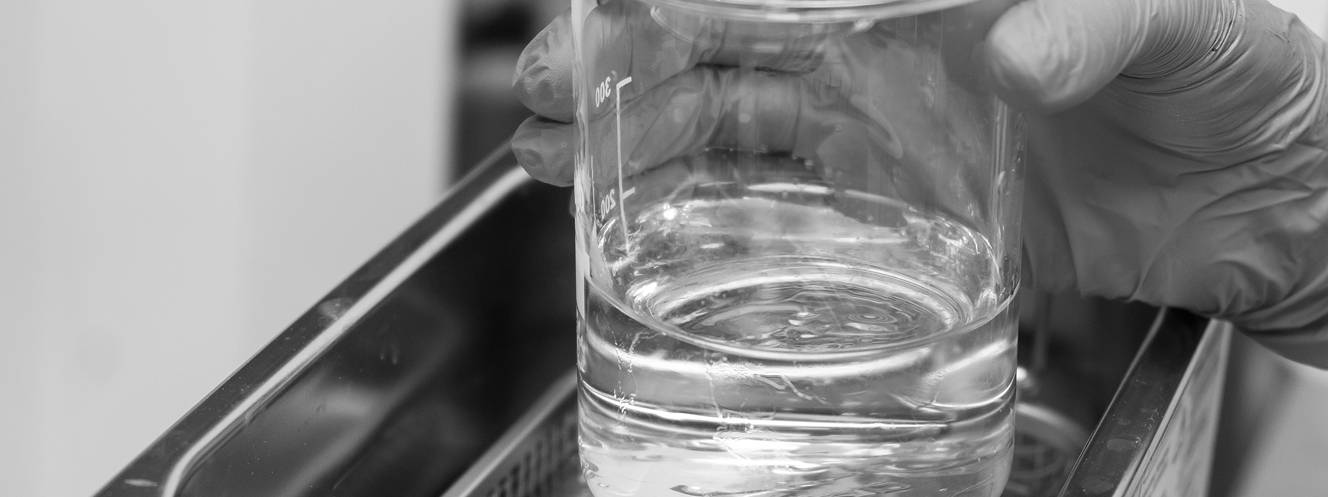
Proper Storage of Bacteriostatic Water
If you are just an individual and you get just as much (little) bacteriostatic water you need for your next couple dosages, you might not even think about storage. But if you are a part of a peptide research lab, you must ensure a steady supply of bacteriostatic water and proper storage.
Whether you’ve opened the bottle, or the bottle remains unopened, you should store it in a dark, cool place with a relatively stable temperature. General recommendation for bacteriostatic water is to keep the room somewhere in the range of 60 to 80 degrees Fahrenheit.
These conditions will ensure long bacteriostatic shelf life and usage potential. But know that once you’ve opened it (draw from it with a syringe), it’s “only” good for around one month before the benzyl alcohol begins to lose its potency and the water itself becomes susceptible to bacterial contamination.